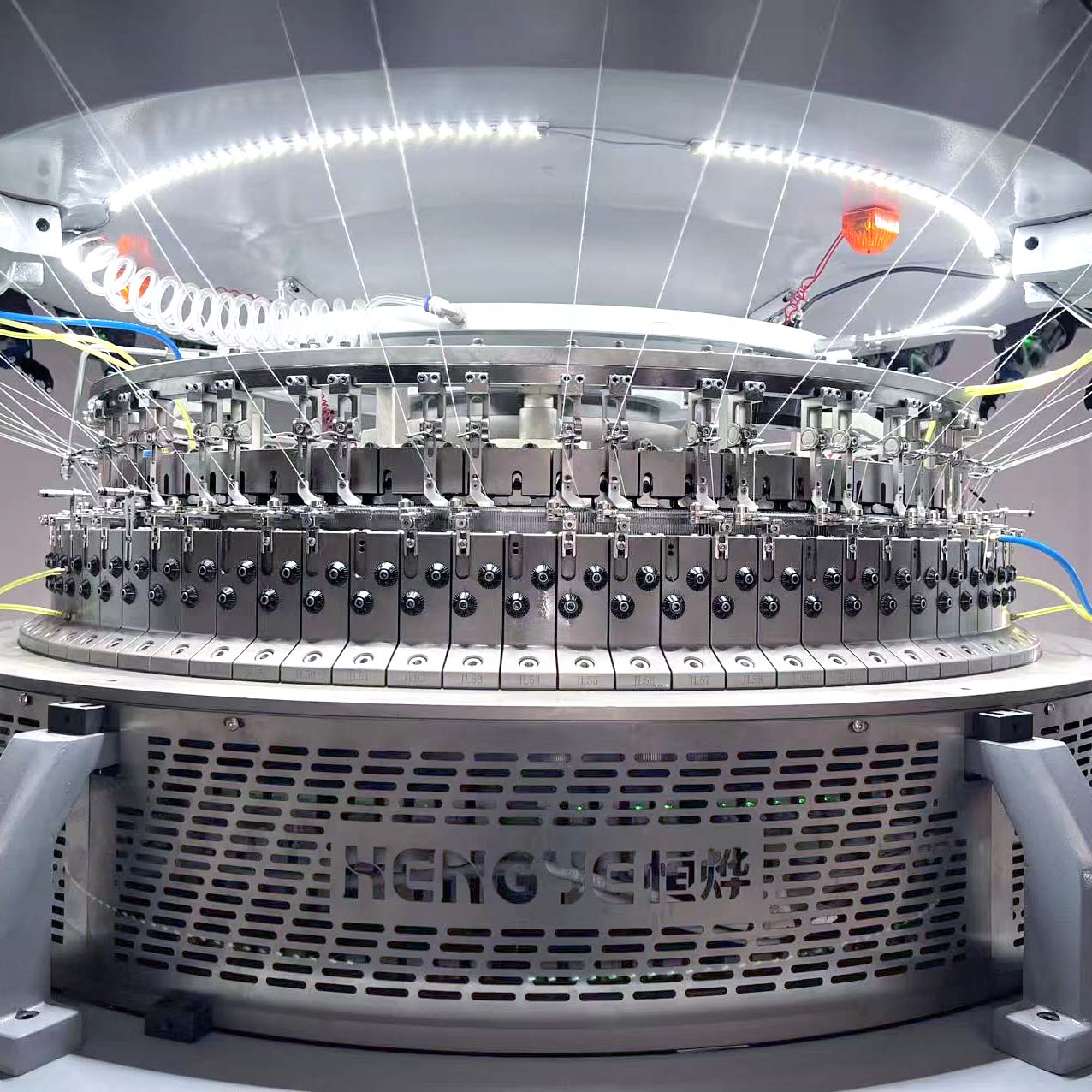
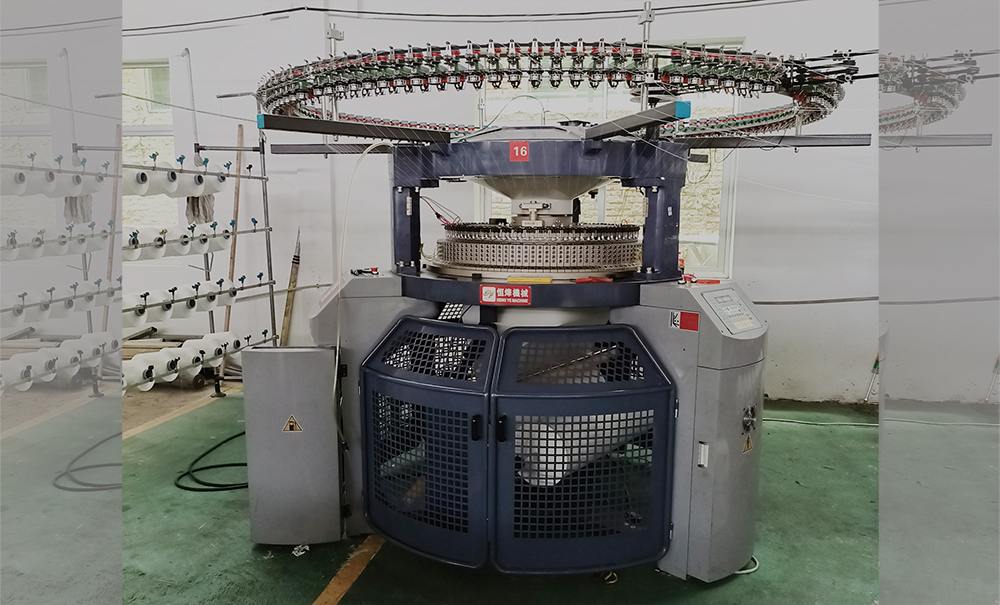
Daily output from a circular knitting machine cannot be judged by RPM alone. It depends on actual needle count, active feeders, stitch length, yarn linear density, fabric structure and operating efficiency. This guide explains a practical method for estimating theoretical and real production, including a worked example for a 34-inch, 28-gauge single jersey machine. It also shows why Lycra-plated, fleece, rib, interlock and jacquard fabrics require modified calculations. Knitting mills can use the checklist to compare supplier capacity claims under consistent conditions and request more reliable production estimates for their target fabrics.
Read More
Transfer jacquard circular knitting machines surpass conventional electronic jacquard models by realizing loop transfer between needle positions, cylinders and dials, breaking the limits of ordinary knitting that only relies on knit, tuck and miss stitches for surface patterns. The technology enables unique fabric structures including genuine open-hole designs, 3D relief textures, rib transitions, and integrated single and double-knit combinations, greatly enriching fabric design possibilities. It is widely applied in functional sportswear mesh, lace-style fashion fabrics, textured materials and knitted shoe uppers, compatible with cotton, polyester, nylon, elastane and various blended yarns. Machine gauge is determined by yarn type, fabric GSM, thickness and practical applications. Oriented to high-value and differentiated fabrics rather than mass production, these machines deliver lower output for complex patterns than conventional knitting equipment.
Read More
A circular knitting machine—also known as a circular weft-knitting machine (or more concisely, a circular knitting machine)—features numerous knitting systems (commonly referred to as "feeds"). For example, in a single-jersey latch-needle circular knitting machine, each knitting system consists of latch needles, sinkers, cam carriers, yarn guides, and other components. Each feed constitutes an independent unit capable of forming loops. Due to its high number of feeds and high rotational speed, this machine achieves high production output. Combined with excellent fabric quality, it offers strong product versatility, rapid pattern changes, and fewer processing steps—factors that have driven its rapid development.
Read More
Fabrics must be woven, and they are used in clothing, shoes, hats, curtains, bed sheets, car interiors, and more. Modern high-tech fabrics continue to emerge, combining powerful functionality with durability. However, the most common and popular fabrics still share similar structures, varying only slightly.
Read More